The Shediac Mascarade presents
What to wear to a Regency ball
A comedy in five acts, with masks
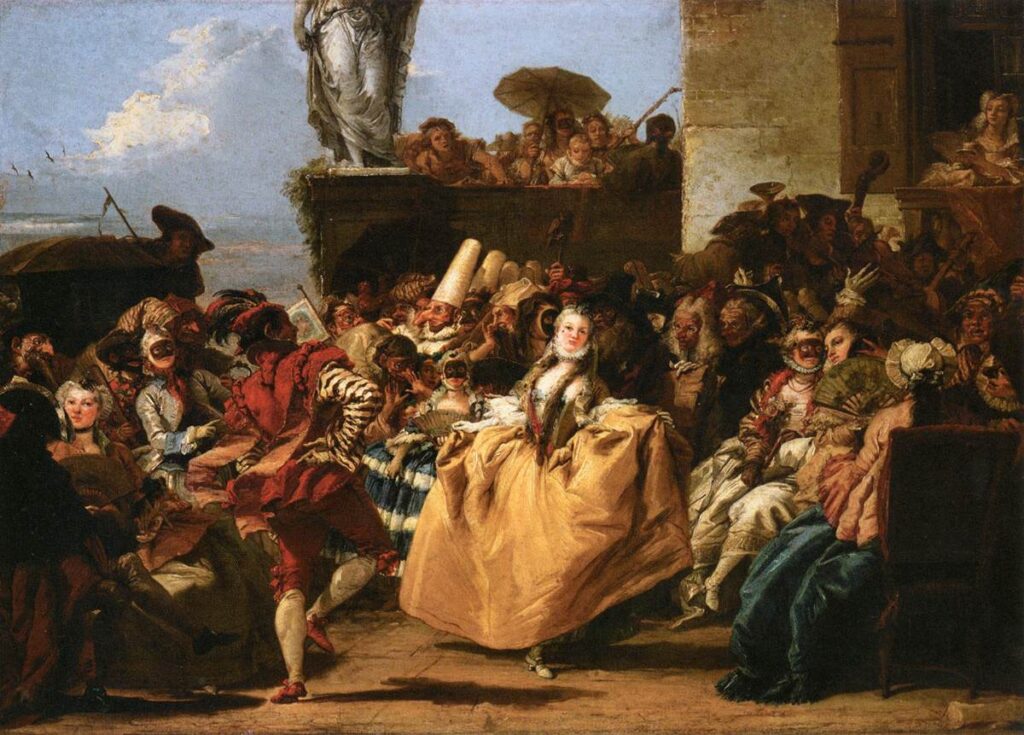
Begin with a mask you’d enjoy wearing. The gown, the coat, and the intriguing person you intend to become can follow.
There is a particular pleasure in dressing for an evening that asks a little more of the imagination. Fortunately, it needn’t ask very much of the sewing machine.
The Shediac Mascarade, May 28th to 30th, 2027, imagines the shore in 1816. The dress invitation is broader: any year of the nineteenth century. A full period costume is optional; a few well-chosen pieces can give an ordinary outfit its own place in the evening.
Act I · The gown
For a Regency gown, begin with the waistline
The recognisable shape has a high waist just beneath the bust, with a skirt falling softly below it. A modern empire-waist dress is a useful starting point. So is a simple long dress with enough room to gather beneath a ribbon.
Try the ribbon before buying anything else. If it makes the dress pull or bunch, let the dress keep its own shape and find another piece to adapt. The evening should involve very little adjusting of clothes.
A shawl adds warmth and movement. A short jacket or cropped cardigan can suggest a spencer, the little jacket worn with the high-waisted silhouette. A ribbon in the hair and a small drawstring bag, or reticule, give the outfit a few finishing details without demanding a new gown.
Choose colours you enjoy wearing. Pale cotton and soft muslin suit the look, but you needn’t arrive dressed entirely in white. And put something useful in the reticule. Even in an imagined 1816, you will want your ticket.
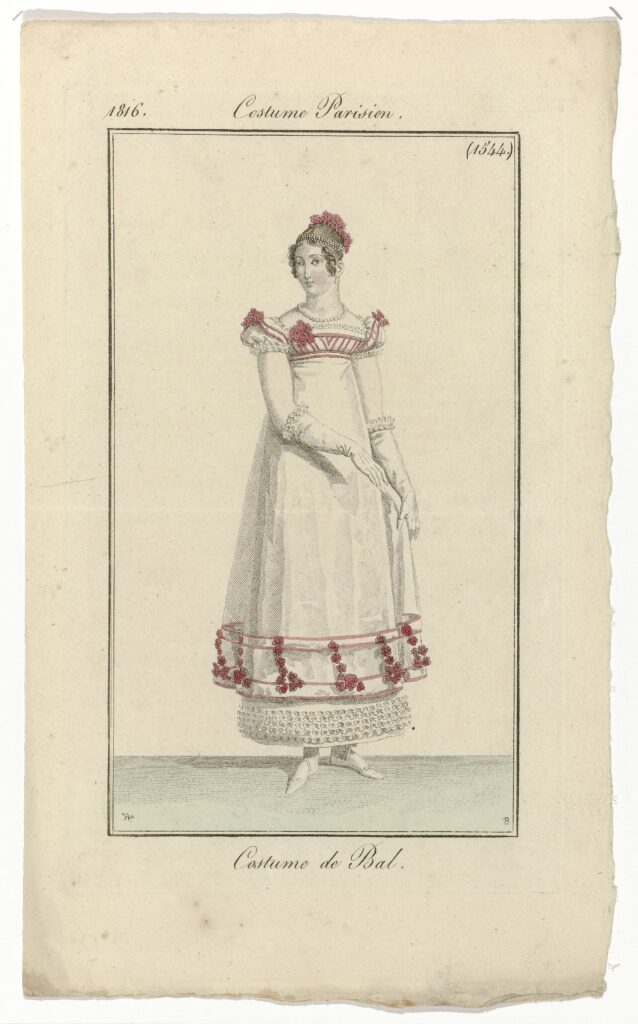
(Enter, waist first.)
Act II · The coat
For a coat and cravat, start with what you have
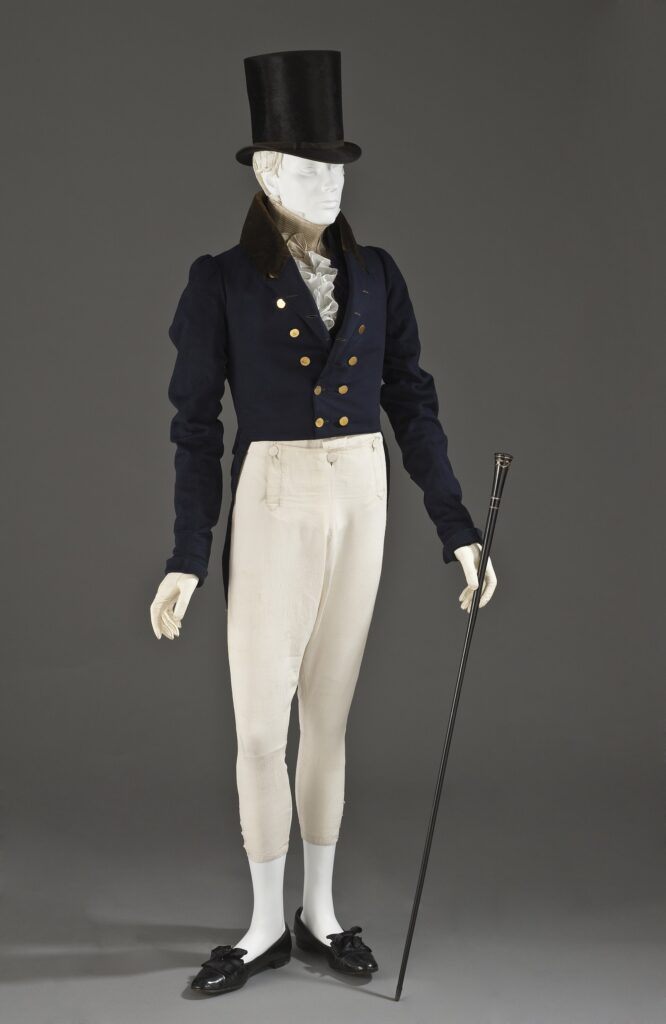
(The cravat, rehearsed. The coat, borrowed. Nobody need know.)
A white shirt, waistcoat, plain trousers, and a cravat make a persuasive beginning. A tailcoat gives the outfit a stronger period shape, if you can borrow, rent, or find one you like.
For the cravat, try a length of soft fabric or a lightweight scarf. Tie it comfortably and practise once before the evening. You should be able to turn your head towards the person who has just said something interesting.
A coat that fits well will do more for the evening than an elaborate one you can barely sit in. The same applies to the rest of the outfit. Borrow the silhouette; keep your freedom to move.
These are two routes into Regency-inspired dress. Choose whichever pieces feel like you, and combine them as you please.
The wardrobe, by name
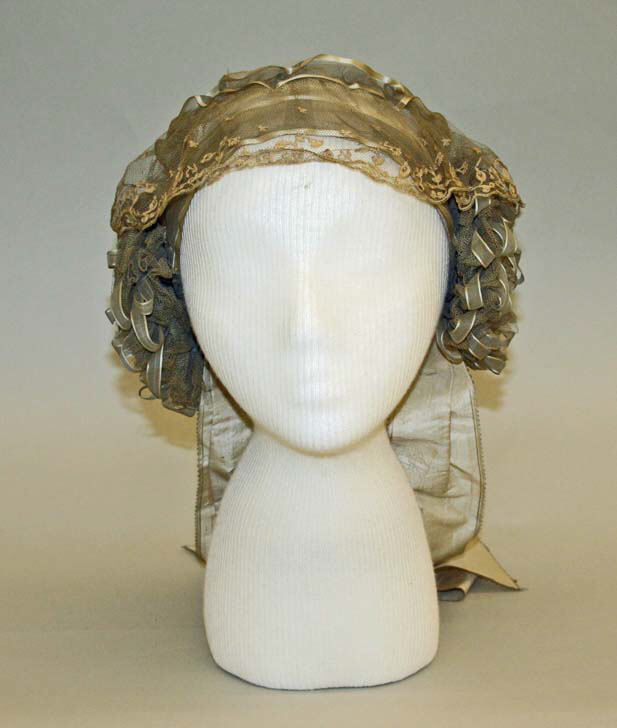
The Regency had a word for every piece of an outfit, and our glossary keeps them all. Here are eight originals as the museums keep them. Tap a name for its story.
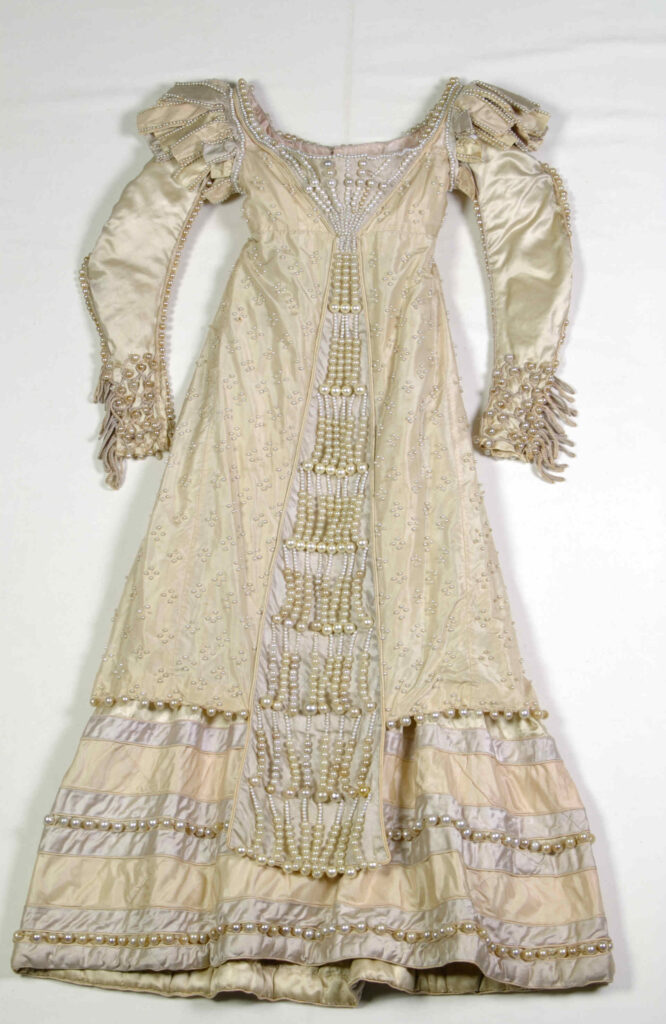
Evening dress, probably French, about 1815. The waist sits just under the bust, and everything else is free to fall.
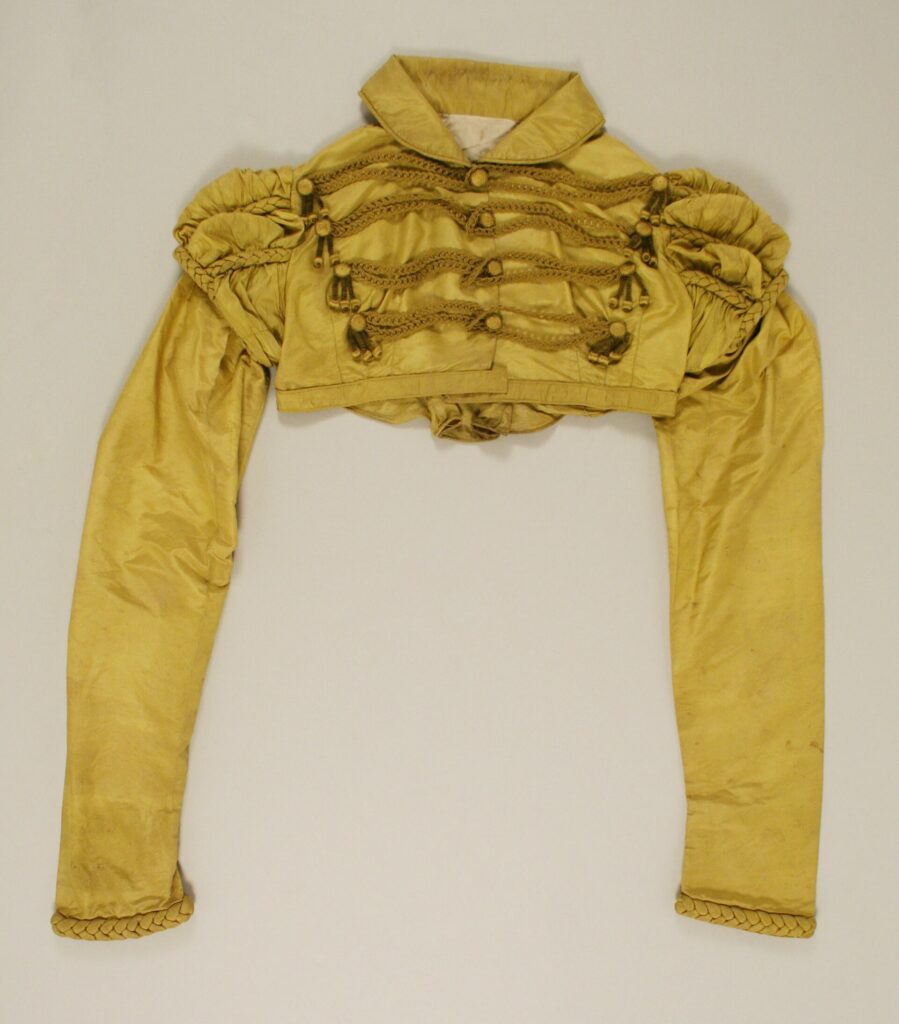
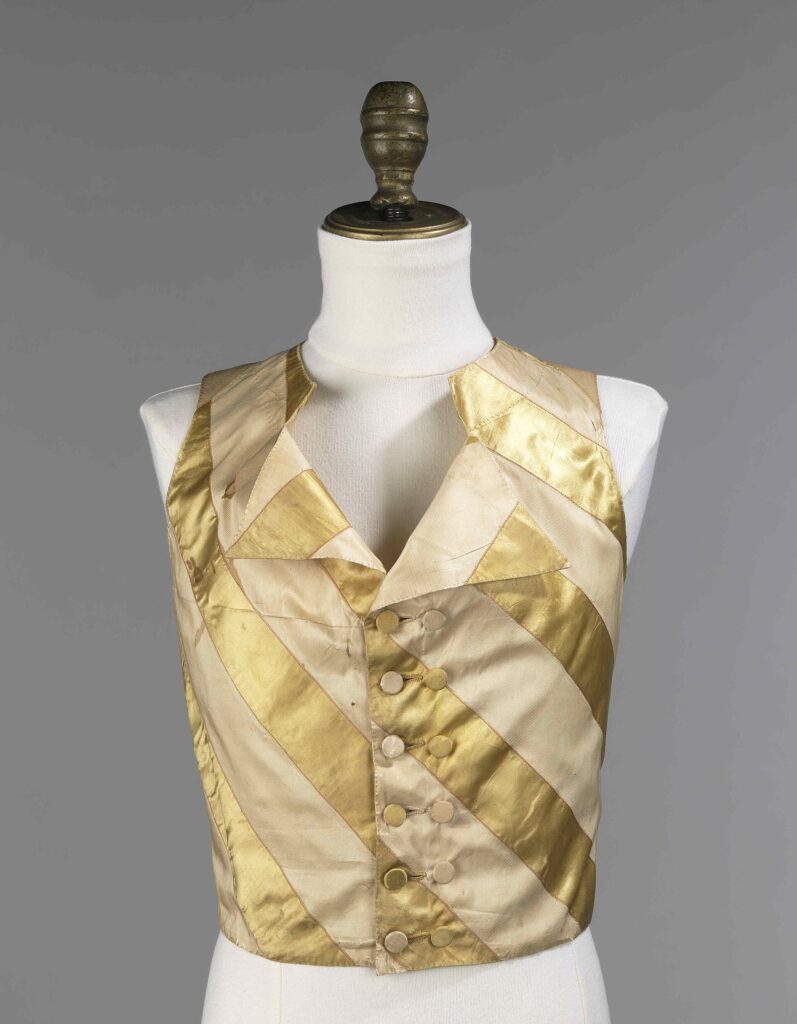
British, about 1815. A jacket that stops where the waist does, which in 1815 was rather high.
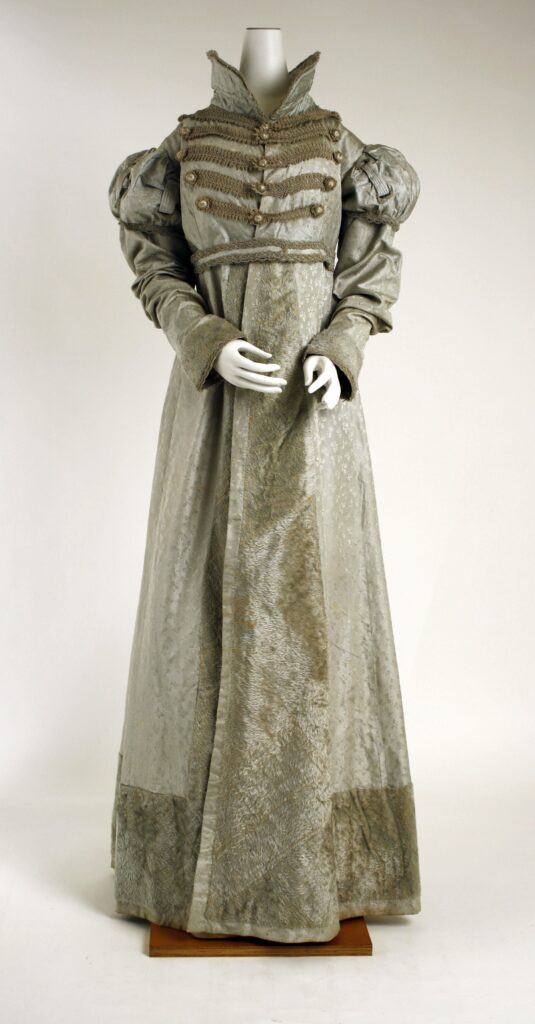
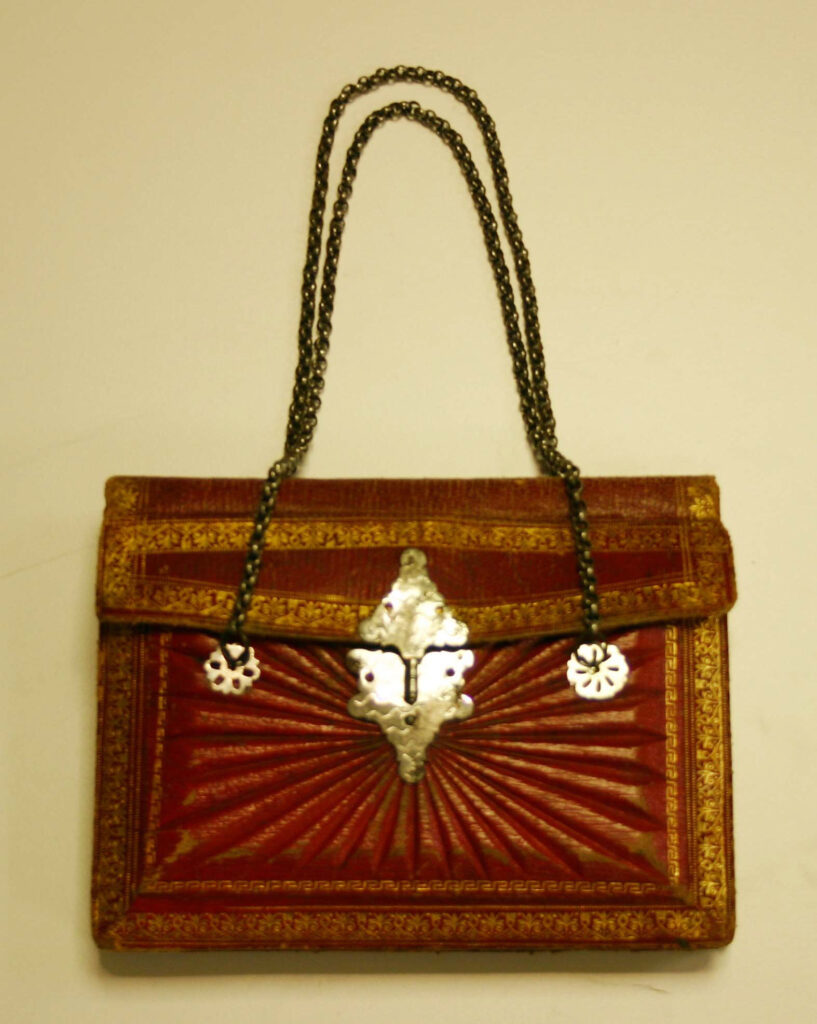
French, early nineteenth century. The slim gown had no room for pockets, so the pocket moved into the hand.
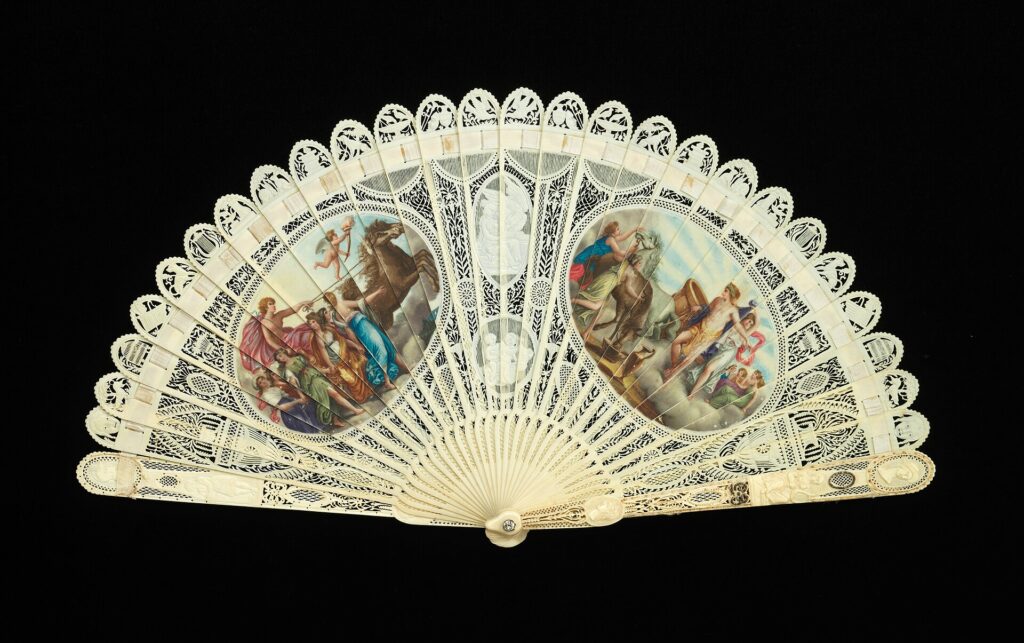
A brisé fan, French, 1800 to 1810. All sticks, no paper, and a language of its own, if the rumours are true.
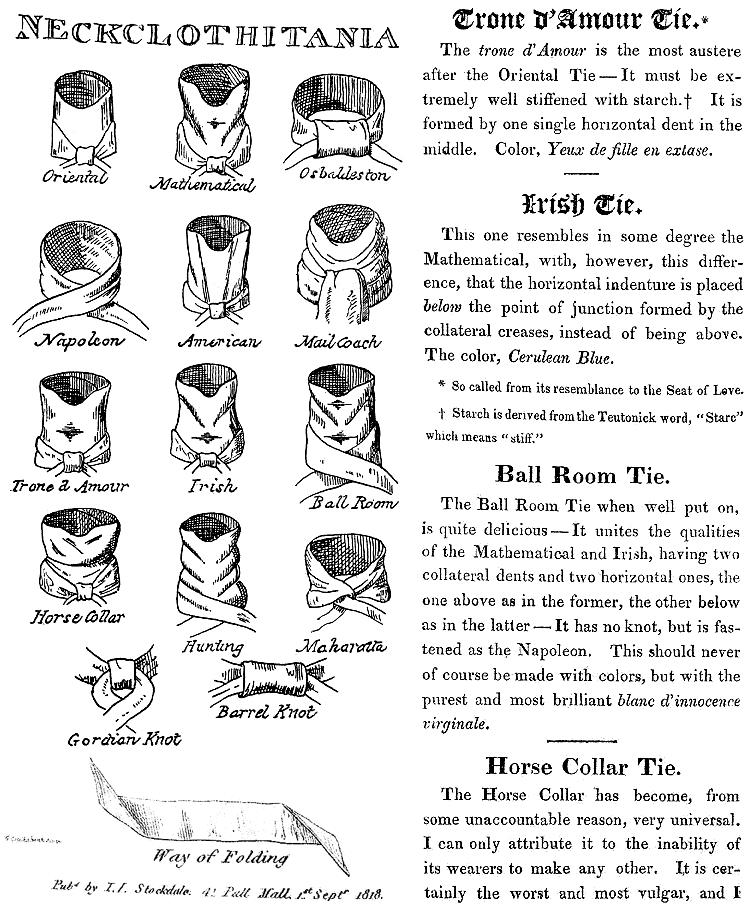
Neckclothitania, London, 1818, etched by George Cruikshank. A whole pamphlet on tying one, which tells you how seriously it was taken.
Act III · The mask
Give the mask a proper rehearsal
Masks are optional, and encouraged. Bring one if you like the idea of arriving a little less recognisable.
Put it on with your glasses, if you wear them. Turn your head, look down, and try a few steps. Adjust the fastening before leaving home. A mask should give you a little mystery without making the path mysterious as well.
An eye mask leaves your mouth free for conversation and supper. A mask on a handle lets you raise and lower it easily, though it occupies a hand. Think about how you’ll carry it while eating or dancing.
It can match the outfit or be the one thing that refuses to. Either is an interesting introduction.
Full-face masks are welcome, too. They come off at the ID check and whenever the guild, security, or emergency services ask.
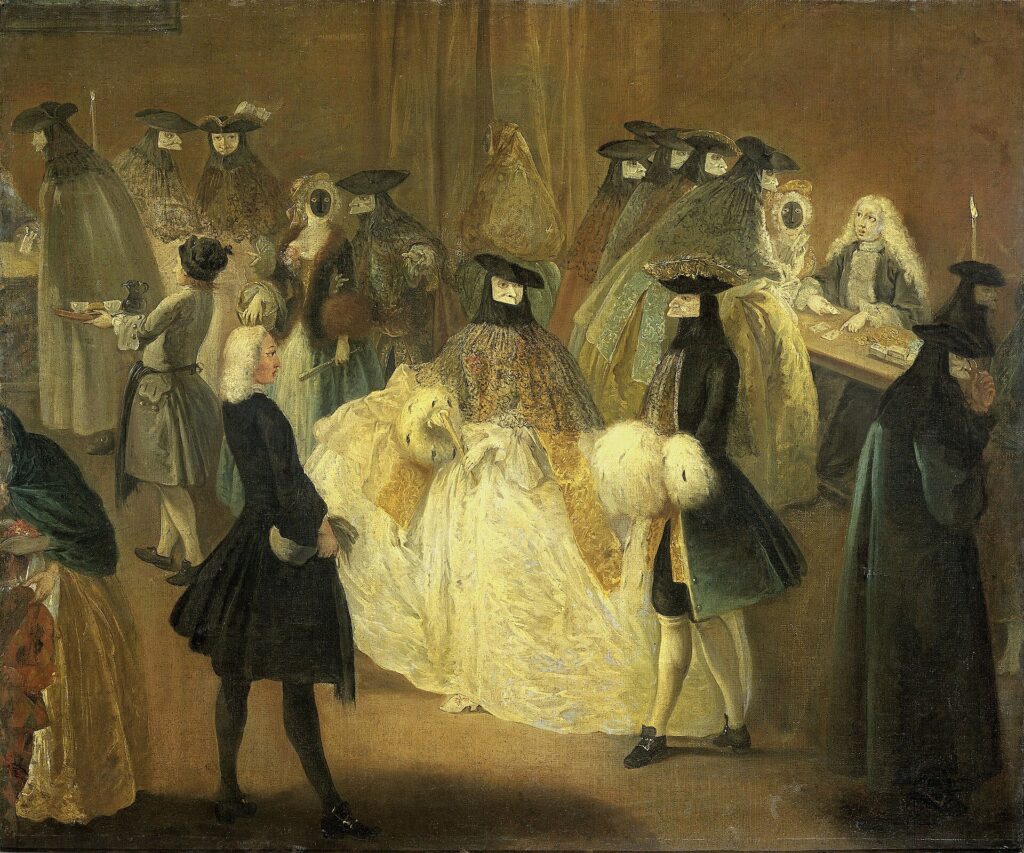
(A mask isn’t there to hide a face. It adds a second one.)
Intermezzo
Dramatis personae: the masks
A mask is a character before it’s a face. Here are four classics as the painters caught them.
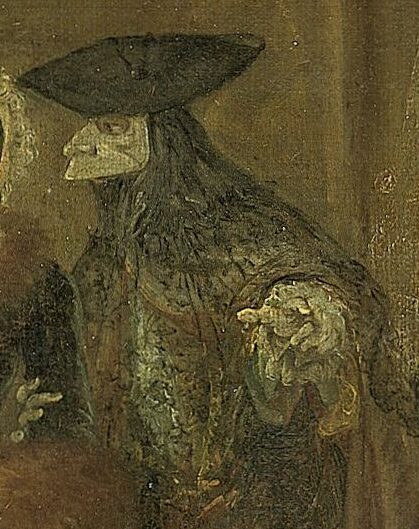
White and square-jawed, it stands away from the mouth, so its wearer can eat, drink, and keep talking. Venice wore it almost as a uniform.
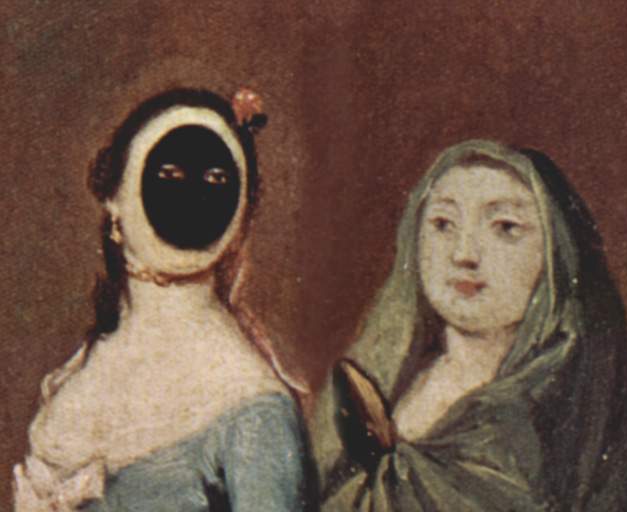
A small black oval held on by a button between the teeth, which meant its wearer couldn’t speak. We suggest an elastic.
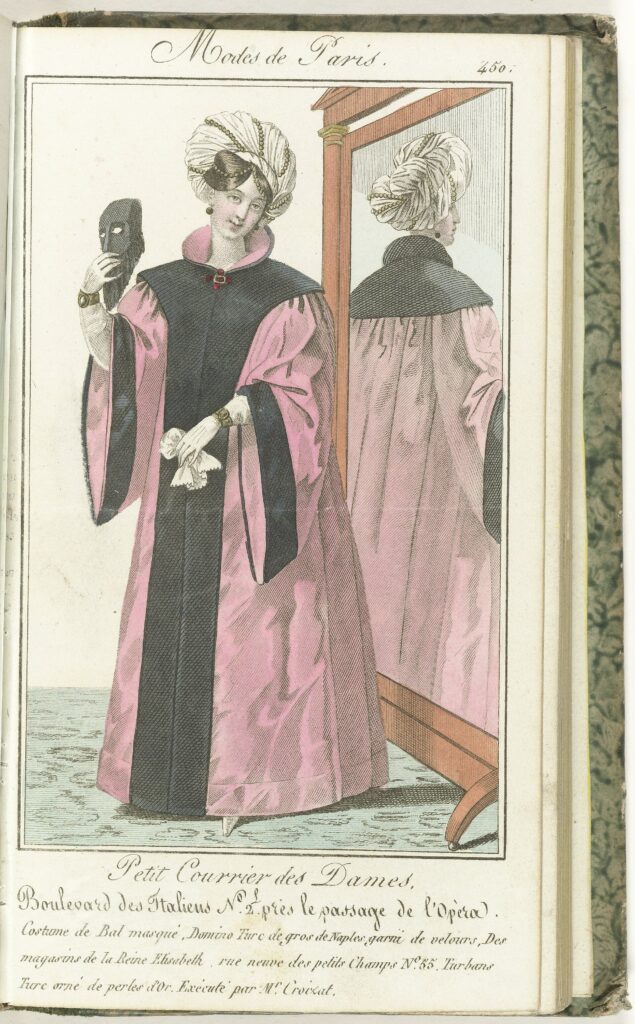
The hooded cloak of the masked ball, here in Paris in 1827. It goes over anything, which is the whole idea.
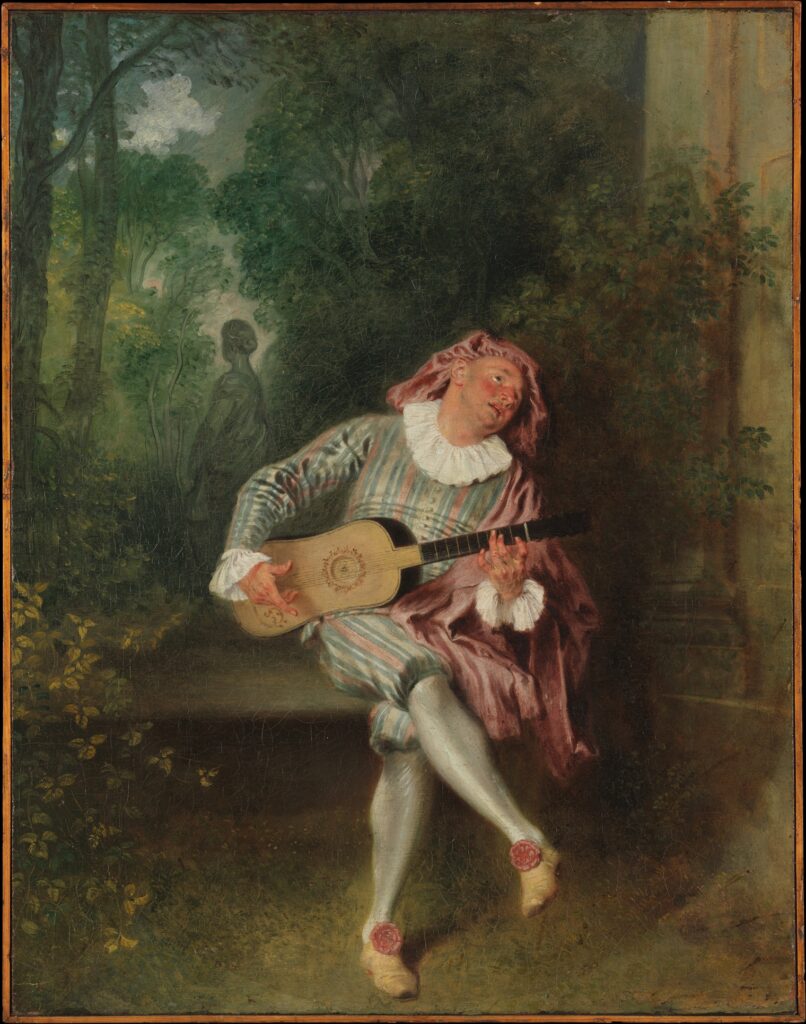
Watteau’s Mezzetin, about 1718. Or skip the mask and come as a character: the commedia dell’arte has a costume for every temperament.
The glossary keeps more: the volto, the columbina, the loup, and the stick mask, among others.
Act IV · The wardrobe
Three ways to find your clothes
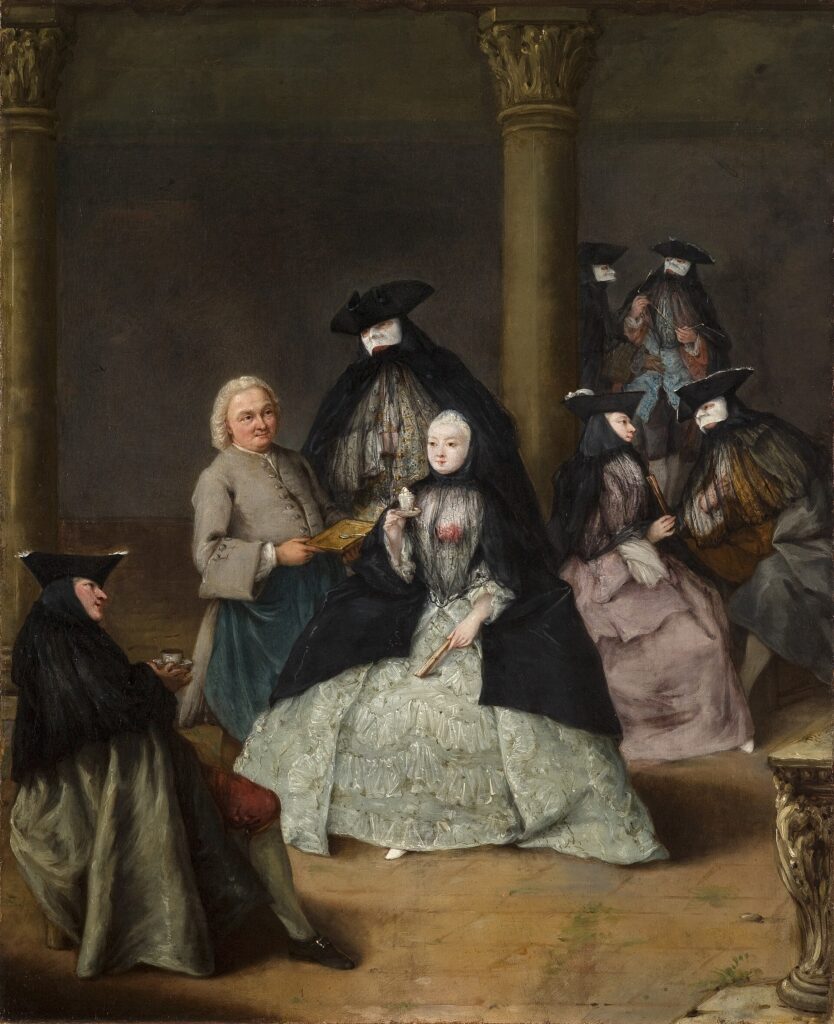
(The house rule on museum collections: not required.)
Use what you own. Lay out the dress, shirt, waistcoat, shawl, scarf, or jacket you already have. Build around the piece you most want an excuse to wear.
Borrow or look second-hand. An old bridesmaid dress, a formal waistcoat, or a long skirt may have another evening in it. Ask friends before starting a shopping list. Check measurements and try the whole outfit together.
Hire or commission one special piece. Ask a costume supplier or maker about the date, fit, and return arrangements. A good mask or a coat may be all you need. There is no obligation to assemble a museum collection before supper.
The Mascarade’s artisan market will include mask and costume makers. Leave yourself time to see what they’ve brought. A conversation with the person who made a piece is a pleasant way to choose it.
Act V · The weather
Dress for late May on the coast
Friday’s Sand Follies take place at Parlee Beach and are included with every Mascarade ticket. Keep a warm layer for the evening, and choose shoes that suit sand. You may prefer a simpler outfit for Friday and save the longer skirt or formal coat for the ball.
The weekend also takes you onto the Neptune grounds, where grass can be uneven or soft. Check hems, leave yourself room to walk, and pack a weather layer. A shawl is charming until it becomes the only thing between you and a cold evening.
Before bringing a cane, parasol, or other prop, consult the current guest policies. For an outfit or access question, write to [email protected].
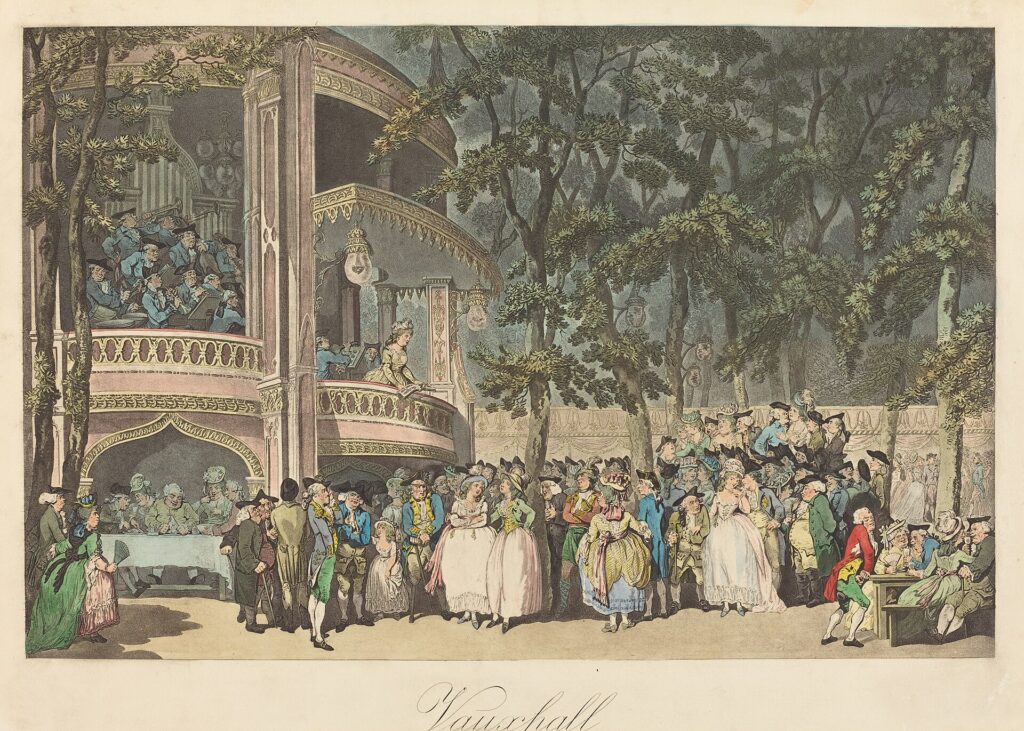
(Exit, pursued by a sea breeze.)
Saturday
Dress for the hour
A Saturday at the Mascarade asks three different things of a costume.
VI
Six o’clock
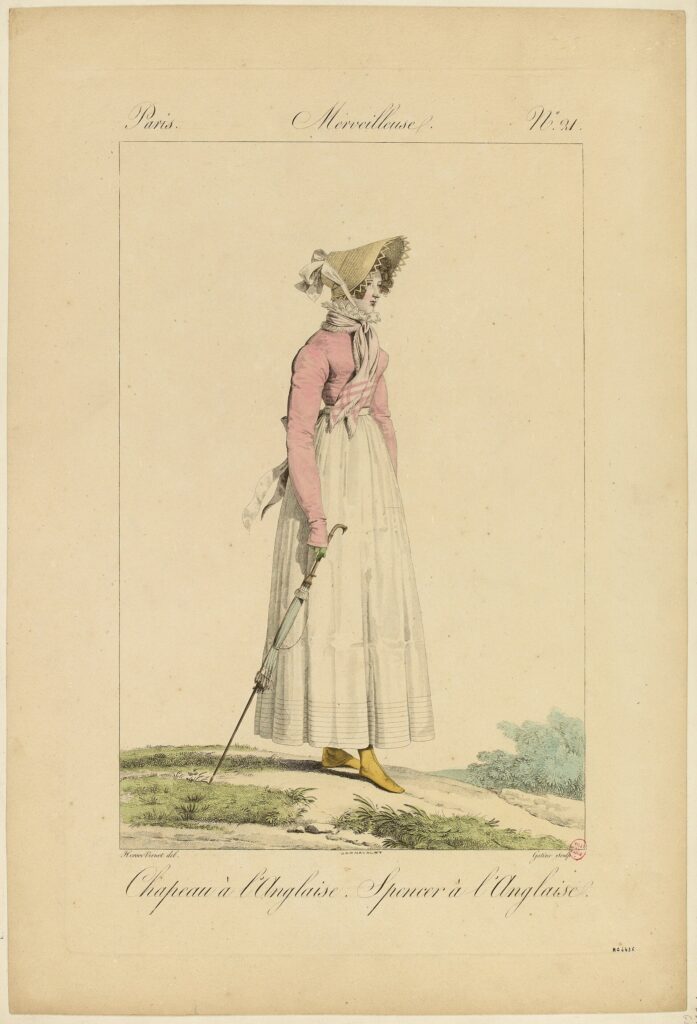
The weekend’s costume parade, on Saturday and again on Sunday, with judges watching the hems. Wear the whole outfit, and shoes that can manage a slow lap.
VIII
Eight o’clock
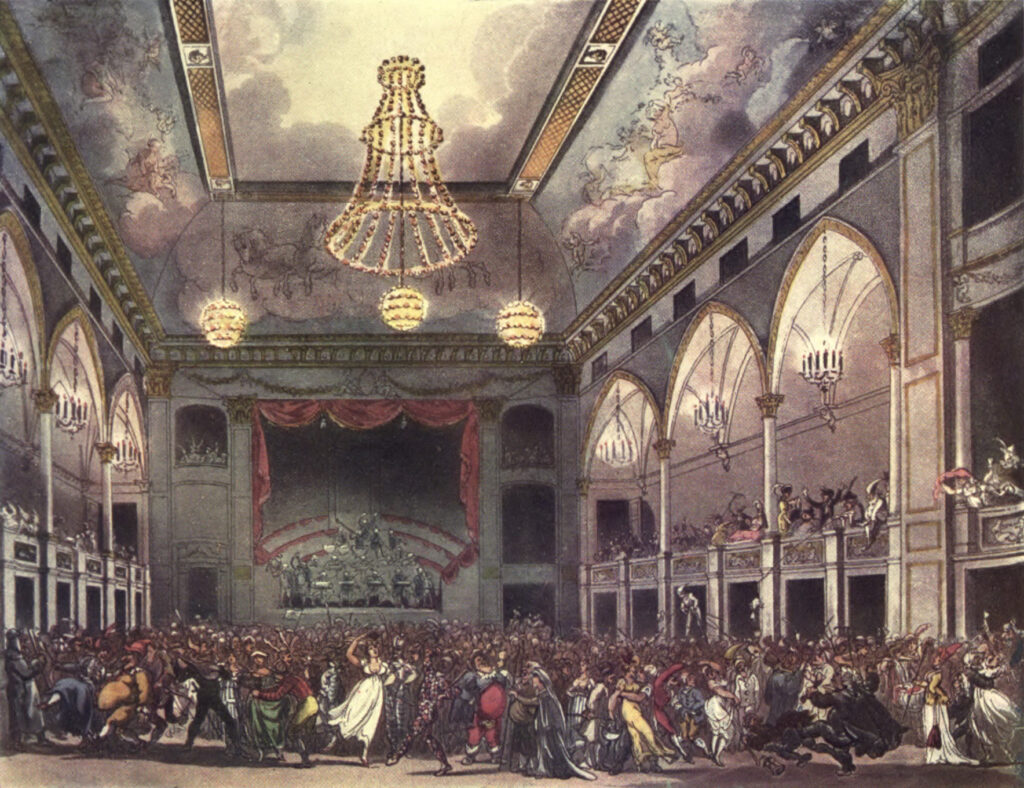
It opens the Masked Ball, everyone in pairs and everyone masked. Make sure yours stays put when you turn your head.
XI
Eleven o’clock
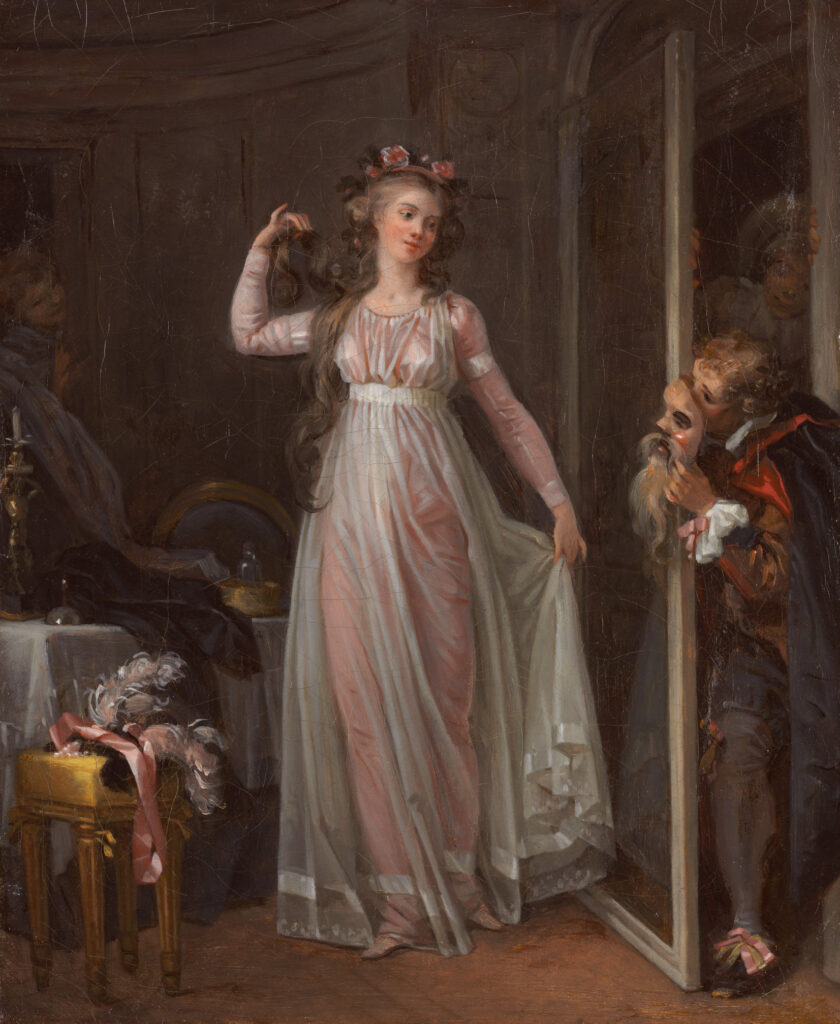
On the stroke, for everyone at once. This is the reticule’s finest hour: bring somewhere to put the mask.
Curtain
Choose the evening before the finishing touches
The Saturday Masked Ball is part of the Mascarade’s invitation. Read the programme and ticket descriptions to choose the experience you want, then finish the clothes around that plan.
You needn’t know exactly who you’ll be when you arrive. A familiar face behind an unfamiliar mask is a perfectly good beginning.
Pictures. Paintings, prints, and garments from The Metropolitan Museum of Art (Open Access, CC0), the Rijksmuseum (CC0), Paris Musées (CC0), the National Gallery of Art in Washington (CC0), the Los Angeles County Museum of Art, the Saint Louis Art Museum, the Musée du Louvre, and Ca’ Rezzonico, all public domain, by way of Wikimedia Commons.